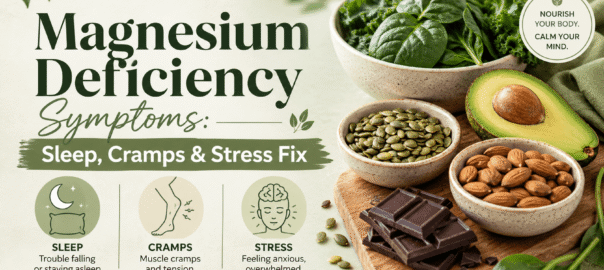
If you’re waking at 3 a.m. with a clenched jaw, a cramping calf, or a heart that won’t settle, low magnesium is one of the first things worth ruling out. Roughly half of Americans aren’t getting enough from food, and your body burns through what it has faster under stress. This guide explains the symptoms, the research, and exactly what to do this week.
Why Magnesium Deficiency Is So Common
Magnesium is a cofactor in more than 300 enzyme reactions. In plain English: it’s a tiny helper your cells need to make energy, relax muscles, calm nerves, regulate blood sugar, build bone, and steady your heartbeat. When it’s low, a lot of small things go sideways at once — and most people never connect the dots because the dots don’t look related.
Your body can’t make magnesium, modern soil delivers less of it than it used to, and stress accelerates how fast you lose it (Fiorentini et al., 2021, Nutrients). That’s not a personality flaw. That’s a mineral gap.
Signs of Low Magnesium in Women Over 45
Magnesium deficiency is bio-individual. Your symptoms may be sleep; your sister’s may be migraines; your friend’s may be constipation and anxiety. Same hub, different spokes on the wheel:
- Trouble falling or staying asleep, especially around 3 a.m.
- Muscle cramps, twitches, restless legs
- Migraines or tension headaches
- Jaw clenching and teeth grinding
- Heart palpitations or that “fluttery” feeling
- Anxiety, irritability, low stress tolerance
- Constipation
- Sugar and chocolate cravings (chocolate is magnesium-rich — your body knows)
What the Research Actually Says
- Sleep. A 2023 systematic review in Biological Trace Element Research (Arab et al.) and a 2021 meta-analysis in BMC Complementary Medicine and Therapies (Mah et al.) both found magnesium supplementation associated with better sleep quality, especially in older adults and those with insomnia.
- Stress. Pickering and colleagues described the magnesium-stress relationship in Nutrients (2020) as a vicious circle — stress depletes magnesium, and low magnesium makes you more reactive to stress.
- Migraines. A 2025 Nutrients review (Dominguez et al.) outlines magnesium’s role in migraine prevention.
- Muscle function. Wang et al. (2017) in Magnesium Research found supplementation improved muscle fitness measures.
- Brain and bone. Chen et al. (2024) in Advances in Nutrition linked higher magnesium status to better cognitive outcomes, and Capozzi et al. (2020) in Maturitas placed magnesium beside calcium, vitamin D, and K2 in skeletal-health protocols.
- Heart and hormones. Tangvoraphonkchai (2018) and Parazzini (2017) show clinical relevance in cardiovascular and gynecological practice.
That’s a lot of spokes on one wheel — and a lot of reasons to take this seriously.
Best Magnesium-Rich Foods
Food first, always. Build daily intake from:
- Pumpkin seeds (about 150 mg per ounce — a third of a day’s needs)
- Almonds, cashews, walnuts
- Spinach and Swiss chard
- Avocado
- Black beans
- Dark chocolate (70% or higher)
- Wild-caught salmon
Start with one simple move: tonight, eat an ounce of pumpkin seeds with dinner and notice how you sleep. It’s a small experiment you can run before the week ends.
Best Magnesium Supplement Form for Your Symptoms
If you’re going to supplement, match the form to the job:
- Magnesium glycinate — gentle, calming, best for sleep and nervous system support.
- Magnesium citrate — moves the bowels. Useful if you’re constipated, inconvenient if you aren’t.
- Magnesium L-threonate — the form most studied for cognition and brain health.
- Magnesium oxide — poorly absorbed. Skip it, even though it’s the cheapest and most common on drugstore shelves.
Quality matters more than the label promises. Avoid proprietary blends and mystery fillers. Pair magnesium with whole-food fats — avocado, walnuts, raw butter — because it does its best work in a body that has the raw materials to use it.
A word of caution: if you have kidney issues, take heart medication, or are pregnant, magnesium dosing is not a guess-and-go situation. Talk to your naturopathic physician before making changes. If you don’t have a naturopath, you can check out mine at LeaveBigPharmaBehind.com.
Other Ways to Raise Magnesium Levels
- Epsom salt baths, twice a week. Magnesium sulfate, 20 minutes, warm water. Your skin will absorb what it needs — and it forces you off your phone.
- Topical magnesium spray on calves and feet before bed if cramps are the main issue.
- Cut the magnesium thieves. Soda and excess coffee deplete it. You don’t have to quit — you have to notice.
- Plan ahead. Put pumpkin seeds, dark chocolate, and leafy greens on the grocery list this week. Every meal is a vote.
The Bottom Line
Your body isn’t broken — it’s asking to be heard. The 3 a.m. ceiling stare, the calf cramp, the clenched jaw, the migraine that arrives like clockwork — those are messages, not malfunctions. Magnesium is one quiet answer hiding in plain sight.
Start with food. Add an Epsom salt bath. If you supplement, choose glycinate, citrate, or L-threonate based on what you actually need. Then watch the small things start to settle.
Get More Like This
If this resonated, subscribe to the free Your Health Unbound newsletter on Substack for weekly, research-backed guidance on sleep, hormones, gut health, and energy for women over 45: substack.com/@yourhealthunbound.
Your body has been talking for a long time — magnesium might be the first place worth listening.
This post may contain affiliate links. If you purchase through them, I may earn a small commission at no extra cost to you. This content is for educational purposes only and is not a substitute for personalized medical advice.
Reprinted with permission from YourHealthUnbound.com
