Tag Archives: womenshealth

Magnesium Deficiency Symptoms

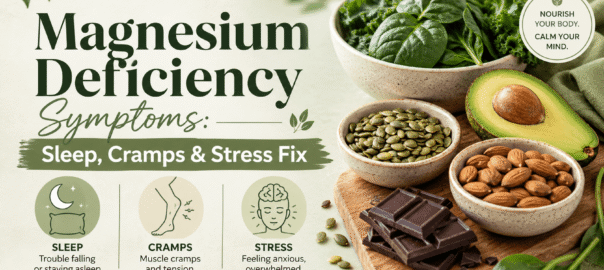
Magnesium Deficiency Symptoms: Sleep, Cramps & Stress Fix

If you’re waking at 3 a.m. with a clenched jaw, a cramping calf, or a heart that won’t settle, low magnesium is one of the first things worth ruling out. Roughly half of Americans aren’t getting enough from food, and your body burns through what it has faster under stress. This guide explains the symptoms, the research, and exactly what to do this week.

Why Magnesium Deficiency Is So Common

Magnesium is a cofactor in more than 300 enzyme reactions. In plain English: it’s a tiny helper your cells need to make energy, relax muscles, calm nerves, regulate blood sugar, build bone, and steady your heartbeat. When it’s low, a lot of small things go sideways at once — and most people never connect the dots because the dots don’t look related.

Your body can’t make magnesium, modern soil delivers less of it than it used to, and stress accelerates how fast you lose it (Fiorentini et al., 2021, Nutrients). That’s not a personality flaw. That’s a mineral gap.

Signs of Low Magnesium in Women Over 45

Magnesium deficiency is bio-individual. Your symptoms may be sleep; your sister’s may be migraines; your friend’s may be constipation and anxiety. Same hub, different spokes on the wheel:

  • Trouble falling or staying asleep, especially around 3 a.m.
  • Muscle cramps, twitches, restless legs
  • Migraines or tension headaches
  • Jaw clenching and teeth grinding
  • Heart palpitations or that “fluttery” feeling
  • Anxiety, irritability, low stress tolerance
  • Constipation
  • Sugar and chocolate cravings (chocolate is magnesium-rich — your body knows)

What the Research Actually Says

That’s a lot of spokes on one wheel — and a lot of reasons to take this seriously.

Best Magnesium-Rich Foods

Food first, always. Build daily intake from:

  • Pumpkin seeds (about 150 mg per ounce — a third of a day’s needs)
  • Almonds, cashews, walnuts
  • Spinach and Swiss chard
  • Avocado
  • Black beans
  • Dark chocolate (70% or higher)
  • Wild-caught salmon

Start with one simple move: tonight, eat an ounce of pumpkin seeds with dinner and notice how you sleep. It’s a small experiment you can run before the week ends.

Best Magnesium Supplement Form for Your Symptoms

If you’re going to supplement, match the form to the job:

  • Magnesium glycinate — gentle, calming, best for sleep and nervous system support.
  • Magnesium citrate — moves the bowels. Useful if you’re constipated, inconvenient if you aren’t.
  • Magnesium L-threonate — the form most studied for cognition and brain health.
  • Magnesium oxide — poorly absorbed. Skip it, even though it’s the cheapest and most common on drugstore shelves.

Quality matters more than the label promises. Avoid proprietary blends and mystery fillers. Pair magnesium with whole-food fats — avocado, walnuts, raw butter — because it does its best work in a body that has the raw materials to use it.

A word of caution: if you have kidney issues, take heart medication, or are pregnant, magnesium dosing is not a guess-and-go situation. Talk to your naturopathic physician before making changes. If you don’t have a naturopath, you can check out mine at LeaveBigPharmaBehind.com.

Other Ways to Raise Magnesium Levels

  • Epsom salt baths, twice a week. Magnesium sulfate, 20 minutes, warm water. Your skin will absorb what it needs — and it forces you off your phone.
  • Topical magnesium spray on calves and feet before bed if cramps are the main issue.
  • Cut the magnesium thieves. Soda and excess coffee deplete it. You don’t have to quit — you have to notice.
  • Plan ahead. Put pumpkin seeds, dark chocolate, and leafy greens on the grocery list this week. Every meal is a vote.

The Bottom Line

Your body isn’t broken — it’s asking to be heard. The 3 a.m. ceiling stare, the calf cramp, the clenched jaw, the migraine that arrives like clockwork — those are messages, not malfunctions. Magnesium is one quiet answer hiding in plain sight.

Start with food. Add an Epsom salt bath. If you supplement, choose glycinate, citrate, or L-threonate based on what you actually need. Then watch the small things start to settle.

Get More Like This

If this resonated, subscribe to the free Your Health Unbound newsletter on Substack for weekly, research-backed guidance on sleep, hormones, gut health, and energy for women over 45: substack.com/@yourhealthunbound.

Your body has been talking for a long time — magnesium might be the first place worth listening.


This post may contain affiliate links. If you purchase through them, I may earn a small commission at no extra cost to you. This content is for educational purposes only and is not a substitute for personalized medical advice.

Reprinted with permission from YourHealthUnbound.com

Grounding Benefits

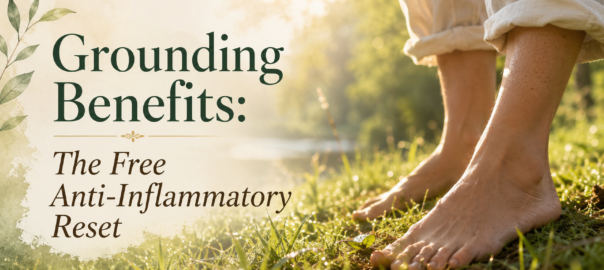
Grounding Benefits: The Free Anti-Inflammatory Reset

If you’re dealing with stubborn inflammation, poor sleep, or a body that feels wired and tired no matter what supplements you take, there’s a free practice most people overlook: putting your bare skin on the earth. Grounding — also called earthing — is one of the most underrated anti-inflammatory tools available, and the research behind it is more solid than you’d expect.

You’ve cleaned up your nutrition. You’ve tried the protocols. You’re still inflamed. Part of what your body may be asking for is something you can do barefoot, for free, in the next ten minutes.

What Grounding Actually Is

Grounding is direct skin contact with the surface of the earth — grass, soil, sand, unsealed stone, or a natural body of water. The premise is simple: the earth carries a mild negative electrical charge, and when you touch it, free electrons transfer into your body. Those electrons appear to neutralize excess free radicals, the unstable molecules that drive chronic inflammation when they accumulate.

Think about the last time your bare feet touched actual dirt or wet grass for more than thirty seconds. For most adults, the answer is sometime in childhood. We sleep in beds off the floor, walk on rubber soles, drive in cars, and live in buildings wrapped in synthetic materials. Every human who came before us spent hours a day in direct contact with the planet. We don’t.

What the Research Says About Grounding and Inflammation

This isn’t woo. A 2015 review in the Journal of Inflammation Research pulled together the existing studies on grounding and reported measurable shifts in inflammation markers, cortisol rhythms, blood viscosity, and pain scores when subjects were grounded versus not. A 2010 study in the Journal of Alternative and Complementary Medicine found that grounding reduced delayed-onset muscle soreness and shifted white blood cell counts in a pattern consistent with a calmer inflammatory response. Mayo Clinic and Cleveland Clinic have both acknowledged the early but promising data on stress and sleep.

Here’s the honest framing: inflammation is a signal pointing upstream to a food trigger, a gut barrier issue, a toxic exposure, a nutrient gap, or a nervous system stuck in overdrive. Grounding doesn’t fix the upstream cause. What it appears to do, for many people, is turn down the volume on the body’s stress and inflammatory response so the rest of the work — the food, the sleep, the gut repair — has room to land.

How to Practice Grounding: A Simple Protocol

You don’t need a gadget. You need skin and earth. Start here:

  • Twenty minutes, bare feet, on grass or dirt. That’s the entry-level dose most of the research used. Morning sun plus bare feet is a two-for-one — grounding plus circadian light cues for better sleep.
  • Wet grass or wet sand conducts better than dry. Morning dew, the edge of a lake, damp soil after rain — all stronger conductors than parched ground.
  • Sit or lie down, don’t just stand. Hands on the ground count. More skin, more contact.
  • Concrete poured directly on earth (unsealed) works. Asphalt, sealed concrete, painted decks, and rubber soles do not. Indoor wood floors don’t either.
  • Try it before bed. Many people report falling asleep faster after even ten minutes of evening grounding.
  • Stack it with a walk. Five minutes barefoot at the start or end of a daily walk — it doesn’t have to be a separate appointment.
  • Pair it with breath. Four counts in, six counts out, for two minutes while your feet are on the earth. You’re signaling to your nervous system that the threat is over.

One related anti-inflammatory note: skip the bottled seed oils. Two tablespoons of raw butter a day, wild-caught salmon a couple of nights a week, and dressings built from fresh-squeezed lemon, apple cider vinegar, salt, and pepper will do more for inflammation than any bottled oil ever will.

Always consult your naturopathic physician before making changes to your treatment plan, especially if you’re managing a circulatory condition or are pregnant.

What About Grounding Mats and Indoor Alternatives?

If getting outside barefoot isn’t realistic — high-rise living, long winters, mobility limitations, or no access to clean ground — grounding mats and sheets are marketed as alternatives. These typically plug into the grounding port of a standard outlet.

Direct contact with the earth is the gold standard. I don’t sell grounding products, don’t recommend a specific brand, and don’t have an affiliate relationship with any manufacturer. Some people report benefits; do your own research, read both positive and critical reviews, and speak with your naturopathic physician first if you have cardiac, circulatory, implanted-device, or other medical considerations.

The Best Source Is Outside Your Back Door

No purchase required, no app, no subscription. This is one of the few health practices that costs nothing and that no industry can monetize, which is probably why it rarely comes up in a ten-minute doctor’s appointment. Follow the money — there isn’t any here. There’s just you and the planet you live on.

If your inflammation picture is more advanced or medically complex, Dr. Glidden’s work at Leave Big Pharma Behind offers deeper natural strategies beyond nutrition.

Your 10-Minute Grounding Experiment

Tomorrow morning, before you check your phone, walk outside and put your bare feet on the ground for ten minutes. Notice how you feel an hour later. Notice how you sleep that night. That’s the entire experiment.

Get More Practical Health Tools

If this kind of straightforward, evidence-backed approach to inflammation, gut health, and hormones speaks to you, subscribe to the free Your Health Unbound newsletter on Substack at https://substack.com/@yourhealthunbound. Each issue delivers one practical tool you can use that week — no fluff, no fear-mongering.


Disclosure: This post may contain affiliate links. If you purchase through them, I may earn a small commission at no extra cost to you. I only share resources I personally use or trust.

Sovereign Sisters Podcast

Biohacker Babes Unleashed: Reclaiming Health Through Sisterhood and Self-Mastery

Growing Up in a Wellness Household

I had the pleasure of sitting down with Lauren Sambataro and Renee Belz, better known as the Biohacker Babes. These two sisters were raised in a home where holistic health wasn’t a trend — it was the norm. Their father, Gene Sambataro, a pioneer in holistic dentistry, introduced them to the principles of personalized wellness before “biohacking” had a name.

That early foundation led them down powerful, individual paths. Renee became a certified nutritional consultant and holistic lifestyle coach. Her training spans adrenal health, detox, and deep work around viruses like Epstein-Barr. Lauren took her background in performance — including her career on Broadway — and blended it with training in corrective exercise and functional health coaching. Together, they’re helping people learn how to tune into their bodies and reclaim responsibility for their health.

Moving Beyond One-Size-Fits-All

We talked about how both sisters learned early on that health isn’t linear — and it’s definitely not one-size-fits-all. Renee shared how her own struggles with brain fog and chronic fatigue forced her to question surface-level solutions. For her, true healing came when she started digging deeper into root causes and listening to her body’s cues.

Lauren echoed that sentiment. Her path included physical burnout and navigating intense performance schedules, but what brought real healing was stepping back to understand the mental and emotional layers behind her symptoms. Both of them agreed that pushing harder often leads to burnout — and slowing down, ironically, is where real progress happens.

🛠️ Ready to Build Your Own Wellness Toolkit?

If you’re looking for trusted supplements, protocols, detox tools, or holistic support systems, I’ve curated everything I use and believe in — all in one place.

Whether you’re navigating fatigue, building your immune system, removing toxins, or just want to feel more grounded and energized, you’ll find something here to support you.

👉 Start your sovereignty stack today: angelaatkins.taplink.ws

Biohacking with Intuition

One of the most powerful threads in our conversation was the balance between science and intuition. In a world full of wearables, data, and optimization tools, the sisters emphasized the importance of tuning in and not outsourcing authority over your own body. They’re not anti-tech — they use diagnostic labs and love good data — but it all has to serve the person, not override their instincts.

We also explored how biohacking, when done with intention, can be empowering rather than obsessive. But it requires self-awareness. They stressed that real wellness is less about chasing perfection and more about showing up with honesty and flexibility.

Sovereignty, Sisterhood, and Strength

This wasn’t just about wellness — it was about sovereignty. About refusing to hand over control of our health to algorithms, struck me most was how their bond as sisters fuels this mission. Working together hasn’t always been smooth, but it’s deepened their individual growth. They hold each other accountable and also allow space for differences — especially when it comes to what their bodies protocols, or even experts. And about learning to trust the quiet voice within that knows when something is or isn’t working.

🎥 Watch the full replay on your preferred channel: YouTube, Rumble, BitChute, Brighteon, and Telegram (where there are no additional platform advertisements) or click the image below:

Reclaim personal sovereignty, bodily autonomy and self-empowerment.
https://t.me/SovereignSisters

Support My Work 💛

Reprinted with permission from YourHealthUnbound.com