Tag Archives: rootcause

Red-Light-Therapy

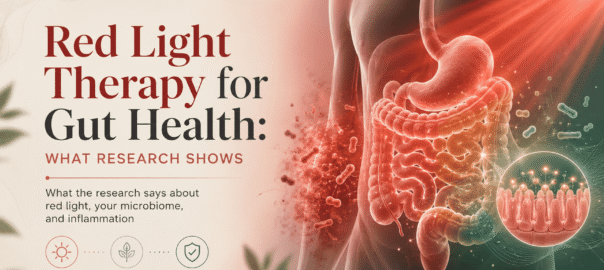
Red Light Therapy for Gut Health: What Research Shows

You cleaned up your nutrition, added bone broth and fermented foods, and the bloating still shows up at 4 p.m. like clockwork. Emerging research on red light therapy — specifically photobiomodulation aimed at the abdomen — suggests photons of certain wavelengths may shift the gut microbiome and calm the inflammation your protocol can’t touch. Here is what the science actually says, and a simple at-home protocol you can test in two weeks.

What Is Photobiomodulation (Red Light Therapy)?

Red light therapy goes by a more clinical name in the journals: photobiomodulation, or PBM. The mechanism is straightforward. Specific wavelengths of red and near-infrared light — roughly 630 to 850 nanometers — penetrate the skin, reach the mitochondria inside your cells, and stimulate them to produce more ATP. ATP is the cellular fuel that powers everything from immune response to tissue repair.

More mitochondrial energy means more capacity for the gut lining to do what it’s designed to do: repair, defend, and communicate with the trillions of microbes living on top of it.

Can Red Light Therapy Heal the Gut? What the Research Shows

A 2023 review by Jahani-Sherafat and colleagues, published in Gastroenterology and Hepatology from Bed to Bench, examined photobiomodulation in conditions tied to dysbiosis — the medical term for an out-of-balance gut microbiome where the wrong bacteria have outvoted the right ones. The authors concluded that PBM appears to modulate the microbiome itself, increasing populations of beneficial bacteria and reducing the inflammatory signaling that comes with dysbiosis. In animal studies, abdominal red light shifted bacterial diversity in a direction that tracked with reduced gut inflammation.

Let’s be clear about what that does and does not mean. It does NOT mean you can shine a light on your belly and skip the work of cleaning up your nutrition. Inflammation is a signal, not a root cause — it points upstream to food triggers, gut barrier dysfunction, and environmental exposures. Diet and environment drive most chronic inflammation, not genetics.

What it DOES suggest is that for many women, red light may be a useful adjunct that helps cells do the repair work nutrition is already setting up. The clients who get the most from these tools are the ones who have already pulled the obvious triggers off their plate. The light is the amplifier, not the foundation.

A 10-Minute Red Light Protocol for Your Gut

You don’t need a clinic or a four-figure panel to test this. A small at-home device is enough to see how your body responds over two to four weeks.

A starting framework — adjust to your bio-individuality and the device you have:

  • Wavelength: Look for a device in the 630–660 nm (red) and/or 810–850 nm (near-infrared) range. Both have research behind them.
  • Distance and time: Start at 6 to 12 inches from bare skin, 10 minutes per session, once daily. More is not better.
  • Where: Over the abdomen — lower belly, around the navel, and the lower right quadrant where the ileocecal valve lives.
  • When: Morning is ideal. It pairs naturally with sunlight on your skin and eyes within the first hour of waking, which is its own circadian medicine and costs nothing.
  • Track it: Keep a two-line journal. One line for what you ate. One line for how your gut felt. Two weeks of honest data tells you more than two months of guessing.
  • Pair it with the basics: Two tablespoons of raw butter daily, wild-caught fatty fish a couple of nights a week, fresh-squeezed lemon and apple cider vinegar instead of bottled oils, and pasteurized cow dairy off the plate during any reset window.
  • Sunlight first: Before spending a dollar on a device, get 10 minutes of morning sun on your skin and in your eyes (no sunglasses, don’t stare at it). Free, ancient, and the original photobiomodulation.

Always consult your naturopathic physician before adding red light therapy, especially with a photosensitizing condition, pregnancy, or a history of skin cancer.

How to Choose a Red Light Device Without Getting Burned

The red light therapy market exploded, and most of what’s on the shelf is overpriced or underpowered. Look for a device that publishes its irradiance numbers (the actual power output in mW/cm²) and the specific wavelengths it emits. If a company won’t disclose those specs, that is your answer.

For the nutritional foundation that makes any light therapy worth trying, professional-grade supplements through a practitioner dispensary are a cleaner option than Amazon roulette. Essential oils that pair well with gut work — peppermint, ginger, fennel — should be therapeutic-grade from a brand that publishes third-party testing.

For medically complex situations — long-standing autoimmunity, multiple diagnoses, or a body that is not responding to nutrition alone — homeopathic and naturopathic care is where deeper work begins. Always consult a qualified practitioner before changing your treatment plan.

The Bottom Line

Red light therapy is not a cure for a struggling gut. It is a credible, research-backed tool that supports the cellular repair your nutrition and lifestyle are already driving. If you have done the food work and still feel stuck, ten minutes of red light over the abdomen is a low-risk experiment worth two weeks of your attention.

Get More Like This — Free

If this is the kind of evidence-based, no-hype guidance you want more of, subscribe to my free Your Health Unbound newsletter on Substack: https://substack.com/@yourhealthunbound. Each issue digs into one practical strategy for women navigating fatigue, gut, hormones, and weight after 45.

Start with one change, track honestly, and let your body tell you what it needs.


Disclosure: This post may contain affiliate links. If you purchase through them, I may earn a small commission at no extra cost to you. I only recommend tools and brands I trust and use with clients.

Reprinted with permission from YourHealthUnbound.com

Grounding Benefits

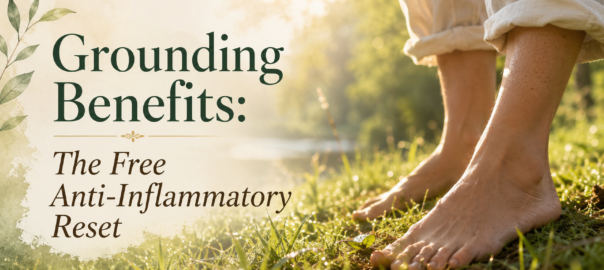
Grounding Benefits: The Free Anti-Inflammatory Reset

If you’re dealing with stubborn inflammation, poor sleep, or a body that feels wired and tired no matter what supplements you take, there’s a free practice most people overlook: putting your bare skin on the earth. Grounding — also called earthing — is one of the most underrated anti-inflammatory tools available, and the research behind it is more solid than you’d expect.

You’ve cleaned up your nutrition. You’ve tried the protocols. You’re still inflamed. Part of what your body may be asking for is something you can do barefoot, for free, in the next ten minutes.

What Grounding Actually Is

Grounding is direct skin contact with the surface of the earth — grass, soil, sand, unsealed stone, or a natural body of water. The premise is simple: the earth carries a mild negative electrical charge, and when you touch it, free electrons transfer into your body. Those electrons appear to neutralize excess free radicals, the unstable molecules that drive chronic inflammation when they accumulate.

Think about the last time your bare feet touched actual dirt or wet grass for more than thirty seconds. For most adults, the answer is sometime in childhood. We sleep in beds off the floor, walk on rubber soles, drive in cars, and live in buildings wrapped in synthetic materials. Every human who came before us spent hours a day in direct contact with the planet. We don’t.

What the Research Says About Grounding and Inflammation

This isn’t woo. A 2015 review in the Journal of Inflammation Research pulled together the existing studies on grounding and reported measurable shifts in inflammation markers, cortisol rhythms, blood viscosity, and pain scores when subjects were grounded versus not. A 2010 study in the Journal of Alternative and Complementary Medicine found that grounding reduced delayed-onset muscle soreness and shifted white blood cell counts in a pattern consistent with a calmer inflammatory response. Mayo Clinic and Cleveland Clinic have both acknowledged the early but promising data on stress and sleep.

Here’s the honest framing: inflammation is a signal pointing upstream to a food trigger, a gut barrier issue, a toxic exposure, a nutrient gap, or a nervous system stuck in overdrive. Grounding doesn’t fix the upstream cause. What it appears to do, for many people, is turn down the volume on the body’s stress and inflammatory response so the rest of the work — the food, the sleep, the gut repair — has room to land.

How to Practice Grounding: A Simple Protocol

You don’t need a gadget. You need skin and earth. Start here:

  • Twenty minutes, bare feet, on grass or dirt. That’s the entry-level dose most of the research used. Morning sun plus bare feet is a two-for-one — grounding plus circadian light cues for better sleep.
  • Wet grass or wet sand conducts better than dry. Morning dew, the edge of a lake, damp soil after rain — all stronger conductors than parched ground.
  • Sit or lie down, don’t just stand. Hands on the ground count. More skin, more contact.
  • Concrete poured directly on earth (unsealed) works. Asphalt, sealed concrete, painted decks, and rubber soles do not. Indoor wood floors don’t either.
  • Try it before bed. Many people report falling asleep faster after even ten minutes of evening grounding.
  • Stack it with a walk. Five minutes barefoot at the start or end of a daily walk — it doesn’t have to be a separate appointment.
  • Pair it with breath. Four counts in, six counts out, for two minutes while your feet are on the earth. You’re signaling to your nervous system that the threat is over.

One related anti-inflammatory note: skip the bottled seed oils. Two tablespoons of raw butter a day, wild-caught salmon a couple of nights a week, and dressings built from fresh-squeezed lemon, apple cider vinegar, salt, and pepper will do more for inflammation than any bottled oil ever will.

Always consult your naturopathic physician before making changes to your treatment plan, especially if you’re managing a circulatory condition or are pregnant.

What About Grounding Mats and Indoor Alternatives?

If getting outside barefoot isn’t realistic — high-rise living, long winters, mobility limitations, or no access to clean ground — grounding mats and sheets are marketed as alternatives. These typically plug into the grounding port of a standard outlet.

Direct contact with the earth is the gold standard. I don’t sell grounding products, don’t recommend a specific brand, and don’t have an affiliate relationship with any manufacturer. Some people report benefits; do your own research, read both positive and critical reviews, and speak with your naturopathic physician first if you have cardiac, circulatory, implanted-device, or other medical considerations.

The Best Source Is Outside Your Back Door

No purchase required, no app, no subscription. This is one of the few health practices that costs nothing and that no industry can monetize, which is probably why it rarely comes up in a ten-minute doctor’s appointment. Follow the money — there isn’t any here. There’s just you and the planet you live on.

If your inflammation picture is more advanced or medically complex, Dr. Glidden’s work at Leave Big Pharma Behind offers deeper natural strategies beyond nutrition.

Your 10-Minute Grounding Experiment

Tomorrow morning, before you check your phone, walk outside and put your bare feet on the ground for ten minutes. Notice how you feel an hour later. Notice how you sleep that night. That’s the entire experiment.

Get More Practical Health Tools

If this kind of straightforward, evidence-backed approach to inflammation, gut health, and hormones speaks to you, subscribe to the free Your Health Unbound newsletter on Substack at https://substack.com/@yourhealthunbound. Each issue delivers one practical tool you can use that week — no fluff, no fear-mongering.


Disclosure: This post may contain affiliate links. If you purchase through them, I may earn a small commission at no extra cost to you. I only share resources I personally use or trust.